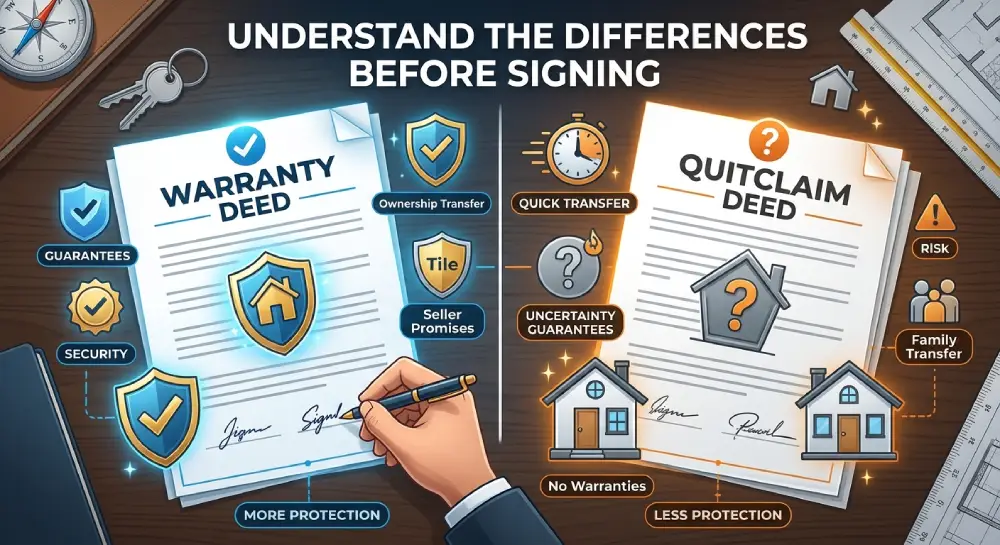
Transferring property ownership involves important legal documents, and choosing the wrong deed can create problems later. Two common options are warranty deeds and quitclaim deeds. Although both transfer property interests, they offer different levels of protection.
Understanding warranty deed vs quit claim deed can help you make a more informed decision before signing or accepting a property transfer.
What Is a Warranty Deed?
A warranty deed is a legal document that transfers property ownership from one person to another while providing guarantees about the property’s title.

The seller, also called the grantor, promises that they have the legal right to transfer the property and that the title does not have undisclosed issues covered by the deed.
A warranty deed on house purchases gives the buyer more protection if someone later makes a valid claim against the property’s ownership.
What Is a General Warranty Deed?
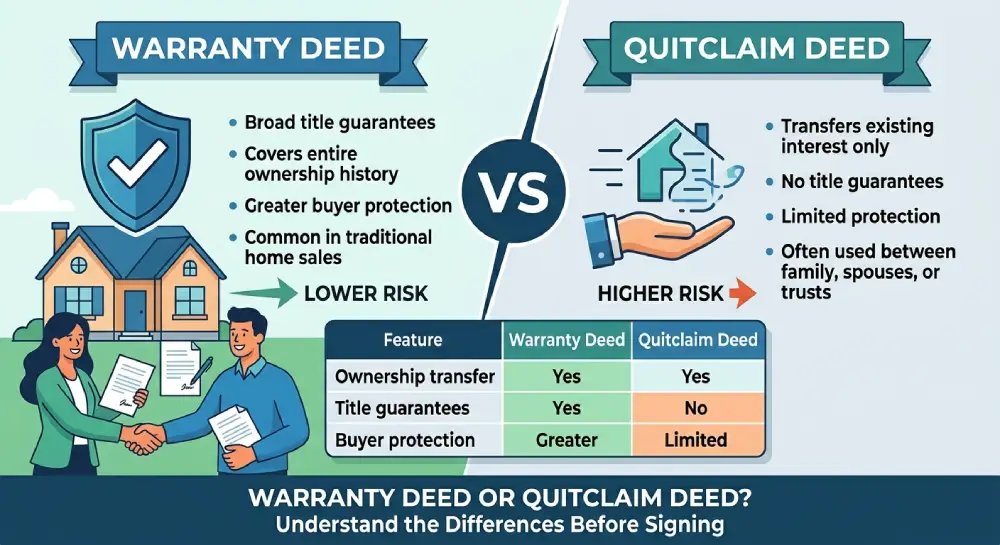
A general warranty deed provides the broadest title protection. It generally covers the entire history of the property’s ownership, not just the period when the current seller owned it.
It typically includes promises that:
- The seller legally owns the property.
- The seller has the right to transfer ownership.
- There are no undisclosed title issues covered by the deed.
- The buyer can legally possess and use the property.
- The seller will help defend the title against covered claims.
These protections make general warranty deeds common in traditional home sales, although requirements vary by state.
What Is a Quitclaim Deed?
A quitclaim deed transfers whatever ownership interest the grantor has in a property to another person. Unlike a warranty deed, it does not guarantee that the grantor actually owns the property or that the title is free from claims.
The main purpose of a quit claim deed is to transfer property interests without providing title warranties.
Quitclaim deeds are often used when:
- Transferring property between family members.
- Adding or removing a spouse from a property title.
- Transferring ownership after a divorce.
- Moving property into a trust.
- Correcting certain ownership records.
Because it offers limited protection, a quitclaim deed is generally not the preferred option for a traditional property purchase.
Warranty Deed vs Quit Claim Deed: Key Differences
The main difference between these documents is the protection they provide to the buyer.
| Feature | Warranty Deed | Quitclaim Deed |
| Ownership transfer | Yes | Yes, whatever interest the grantor has |
| Title guarantees | Yes | No |
| Buyer protection | Greater protection | Limited protection |
| Title defects | Covered claims may be addressed | No title guarantees |
| Common use | Traditional property sales | Family and ownership transfers |
| Risk to buyer | Generally lower | Generally higher |
When comparing quitclaim deed vs warranty deed, consider whether the transaction requires title protection or simply a transfer of an existing ownership interest.
Warranty Deed vs Grant Deed
A grant deed is another type of property transfer document used in certain states. It generally provides some title warranties, but these are more limited than those in a general warranty deed.
For example, a grant deed commonly assures the buyer that the seller has not transferred the property to someone else and has not created undisclosed title issues during their ownership.
A general warranty deed typically offers broader protection because its guarantees can cover issues from before the seller acquired the property.
The exact differences depend on state law, so buyers should understand which deed their state recognizes.
Which Deed Should You Choose?
The right deed depends on the reason for the transfer.
- Buying a home: A general warranty deed often provides stronger protection.
- Transferring property to a family member: A quitclaim deed may be suitable.
- Divorce-related transfers: A quitclaim deed is sometimes used to remove or transfer an ownership interest.
- Transferring property into a trust: A quitclaim or another appropriate deed may be used, depending on state requirements.
Before signing, review the property title and understand what rights and guarantees the document provides.
What to Check Before Signing a Property Deed
Regardless of the deed type, take time to review the details.
- Confirm the legal names of the grantor and recipient.
- Check the property’s legal description.
- Understand whether the deed includes title warranties.
- Look for existing liens or ownership disputes.
- Confirm state-specific signing and recording requirements.
- Consider getting help from a real estate attorney or title professional.
A deed transfers property interests, but it does not automatically remove mortgages, liens, or other existing obligations.
Conclusion:
Choosing between a warranty deed vs quit claim deed depends on the type of property transfer and the protection needed. Warranty deeds provide stronger title guarantees, while quitclaim deeds offer a simpler way to transfer whatever ownership interest someone holds.
Before signing, make sure you understand the document and how it affects your property rights.
Frequently Asked Questions
What is the main difference between a warranty deed and a quitclaim deed?
A warranty deed provides title guarantees, while a quitclaim deed transfers the grantor’s existing interest without guaranteeing ownership or title condition.
Is a warranty deed better than a quitclaim deed?
For most traditional property purchases, a warranty deed offers greater protection to the buyer.
What is the purpose of a quitclaim deed?
It transfers an ownership interest, often between family members, spouses, or trusts.
Can a quitclaim deed transfer ownership of a house?
Yes, but it only transfers whatever ownership interest the grantor legally holds.
What is a general warranty deed?
It is a deed that provides broad title guarantees, generally covering the property’s ownership history.
Is a quitclaim deed safe for buying a house?
It can carry significant risk because it provides no guarantee that the seller owns the property or has clear title.
What is the difference between a warranty deed and a grant deed?
A general warranty deed usually provides broader title protection, while a grant deed offers more limited guarantees under applicable state law.
Does a warranty deed prove ownership?
It documents a property transfer and includes title warranties, but buyers should still review public records and verify the title.
Can a quitclaim deed remove someone from a property title?
Yes. It can transfer that person’s ownership interest to another party, subject to applicable legal requirements.
Should I consult an attorney before signing a deed?
It is a good idea, especially when the transfer involves a property sale, divorce, inheritance, liens, or disputed ownership.
