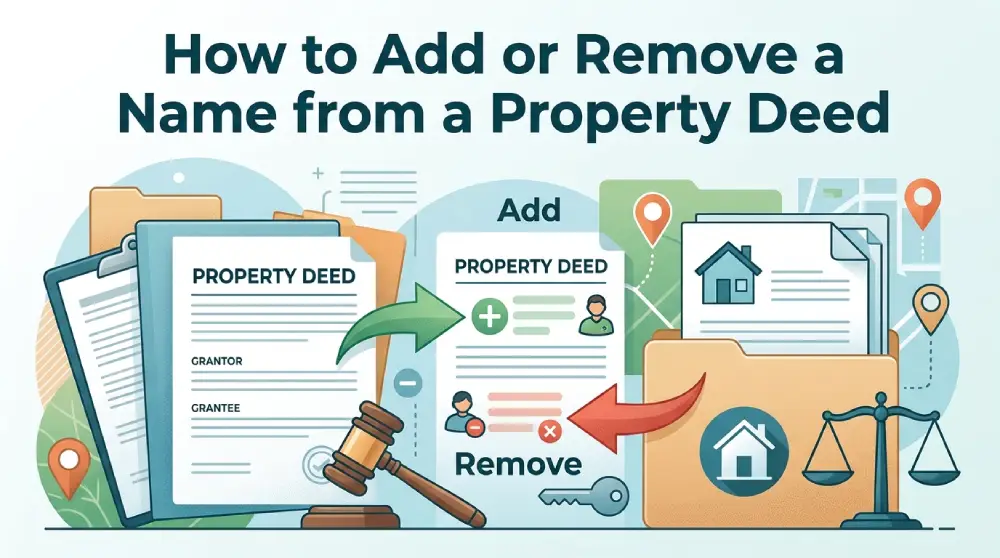
Adding or removing someone from a property deed can affect ownership rights, taxes, and future property transfers. Whether you want to add a spouse, include a family member, or remove a former co-owner, understanding the legal process is essential.
If you want to add name on deed records, the steps generally involve preparing a new deed, obtaining the required signatures, and recording the document with the appropriate local office. Requirements vary by state and property location.
How to Add a Name to a Property Deed
If you’re wondering how to add a name to a deed, the process usually involves these steps.

Review the Existing Deed
Obtain a copy of your current property deed and check how ownership is recorded. Confirm the property’s legal description and the names of all current owners.
Before you add name on deed records, consider whether the change will affect your mortgage, taxes, or estate planning.
Choose the Appropriate Deed
Different deeds provide different levels of protection. A quitclaim deed is commonly used to transfer an owner’s interest without guaranteeing the quality of the title. Other deed types may offer additional warranties.
If you’re researching how to add someone to a house deed, consult a real estate attorney or title professional to determine which document suits your situation.
Prepare and Sign the Document
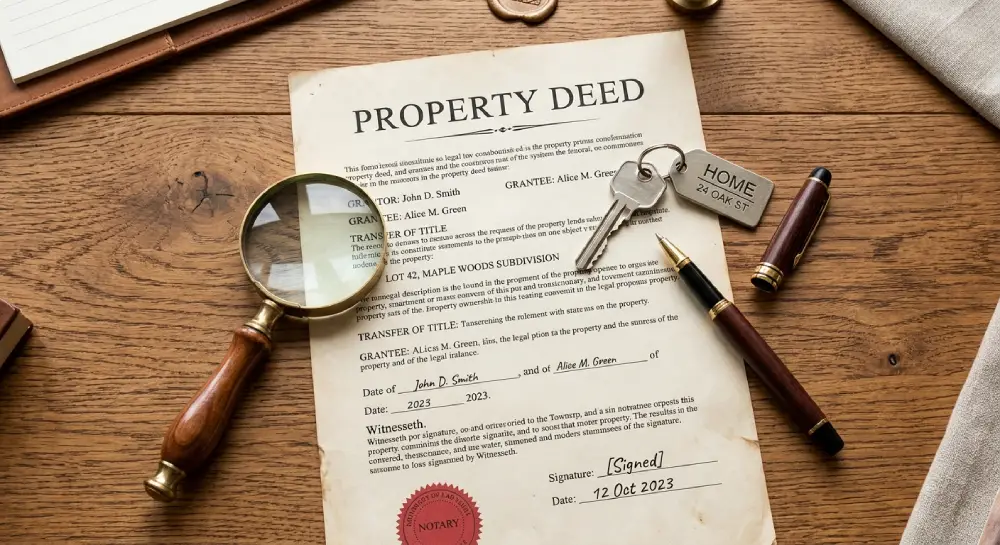
The deed must include the correct property description, grantor and grantee information, and legally required language. Depending on your state, signatures may need notarization or witnesses.
Using the correct document is important when you add name on deed records to avoid processing problems.
Record the New Deed
Submit the signed deed to the appropriate county recorder, register of deeds, or land records office. Pay any applicable recording fees and transfer taxes.
Recording the document generally makes the ownership change part of the public property records, subject to local law.
How to Remove or Change a Name on a Deed
A house deed name change may be necessary after divorce, marriage, inheritance, or a change in ownership arrangements. However, simply changing a name on a document is not always enough to change legal ownership.
If an owner is being removed, that person may need to sign a new deed transferring their interest to the remaining owner. If you’re researching how to change name on deed records after marriage or a legal name change, the required paperwork may differ from an ownership transfer.
Always verify whether the situation requires a correction, a new deed, or another legal document.
Understanding Property Deed Transfers
A property deed transfer changes the legal ownership interest in real estate. It may occur through a sale, gift, inheritance, or transfer between family members.
A deed transfer can have tax and financial consequences. Adding a person to a property may affect property taxes, gift tax considerations, mortgage terms, and eligibility for certain benefits.
Before completing a transfer of deed form, confirm the requirements with your local recording office and review any mortgage restrictions.
Grant Deed vs. Quitclaim Deed
Knowing the difference between a grant deed and a quitclaim deed will help you choose the right deed.
The protections in a grant deed are generally limited, but there are some protections to the title that are provided. A quit claim deed conveys the grantor’s interest in the property, but does not provide any warranty of title or of any interest in the property.
When trying to find a document preparation solution on the web, some people are searching for a LegalZoom quitclaim deed. Using online forms can alleviate paperwork, but may not cover all state requirements and/or tax and ownership issues associated with a transfer.
If the property is mortgaged, has more than one owner or an unusual title history, consult a professional.
How to Add Someone to a House Deed Safely
If you’re asking how do you add a name to a house deed, start by identifying the purpose of the transfer and the ownership arrangement you want.
For instance, the legal and financial implications of adding a spouse as a joint owner is different than adding an adult child. Discuss survivorship rights, ownership percentages, mortgage obligations, and potential tax implications before signing.
If you wish to add someone to a property deed, be sure that the deed is consistent with the desired arrangement of ownership and that it conforms to your jurisdiction’s laws.
Conclusion
Removing or adding a name to a property deed must be well documented and also have an understanding of local property law. Each step from picking the right deed to actually executing the property deed transfer can have an impact on the rights to ownership and financial obligations.
Review your mortgage before you add name on deed records, know the tax consequences and check with your local property office about the requirements to record. If there are ownership or legal concerns, a real estate lawyer can assist you from making expensive mistakes.
Frequently Asked Questions
Can I add someone to my property deed without selling the house?
Often, yes. An owner may transfer part of their ownership interest through a properly prepared and recorded deed, subject to applicable laws and mortgage requirements.
Does adding someone to a deed affect my mortgage?
It can. There are certain restrictions (also known as transfer conditions) or clauses on some mortgages that could become active when ownership changes. Be sure to check your loan paperwork and consult with your lender before you proceed.
Can I remove someone’s name from a deed without their consent?
Typically, the removal of a co-owner involves his or her consent, or a court order. The detailed process is dependent on the local law and the circumstances.
Is a quitclaim deed legally valid?
A properly executed and recorded quitclaim deed can be valid, but does not necessarily provide a clear title. Variations in requirements differ from jurisdiction.
How much does a property deed transfer cost?
Fees include legal counsel, recording fees, transfer taxes and the preparation of the documents. The total amount depends on the location and type of transfer.
Do I need a lawyer to add a name to a deed?
Not always, but if the property is under mortgage, owned by more than one person, on tax issues and/or has complex ownership then legal advice is recommended.
Can I add my child to my house deed?
In many cases, yes, but doing so may affect taxes, inheritance planning, and eligibility for certain benefits. Review the consequences before transferring ownership.
What is a transfer of deed form?
It is a document which transfers a property interest. The proper form will vary depending on the transaction and the recording requirements of the area.
How long does a property deed transfer take?
Preparation can take several days and it may take different lengths of time depending on the local office where you record. Processing can take longer if documents are incomplete.
Can I change a name on a deed after marriage?
A legal name change may require supporting documents and an appropriate correction or updated deed, depending on local rules and whether ownership itself is changing.
