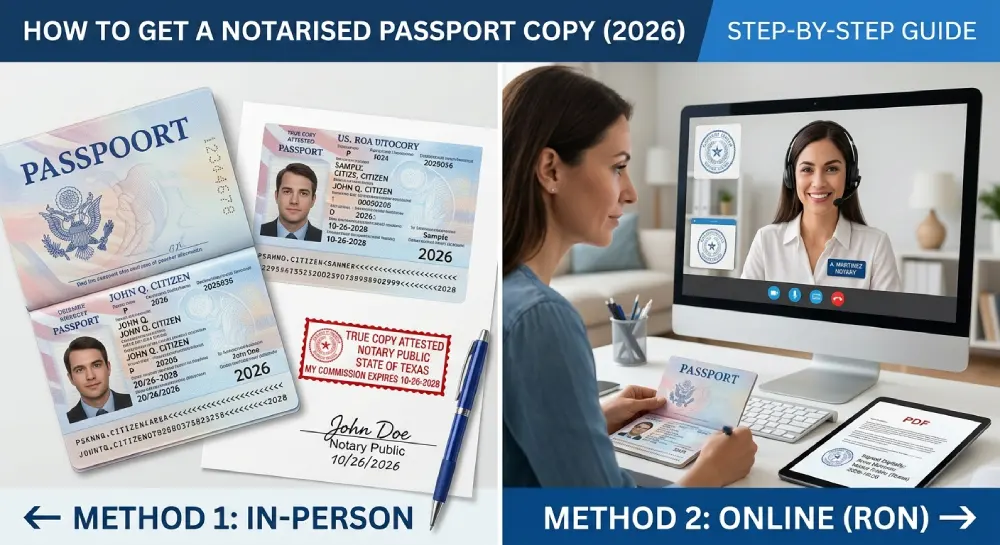
Getting asked for a passport copy is common. But when the fine print says “notarised copy,” it stops being a simple photocopy job. It is a formal legal step that proves your copy is a true match for the original. Once you understand the process, it is very straightforward to understand the notary for passport.
What a Notarised Official Copy of Passport Actually Is
A notarised copy of your passport is literally just a photocopy of your ID page that a notary checks against the original, then stamps and signs to say it’s legit. They look at your real passport, make a copy, and seal it with their official certificate.
Now, here’s what a lot of folks get wrong with notarizing a passport. The notary isn’t verifying if your passport is real or still valid. They’re not checking its authenticity. All they’re doing is saying, “Yep, this copy matches the original I saw.” That’s it.
Two Different Ways to Get It Done
How this notarized copy of passport works depends on a simple difference: whether your state allows the notary to verify the copy themselves, or if you have to swear to it .
- Attested Photocopy (In-Person): The notary watches you or makes the photocopy themselves, compares it to the original, and signs a certificate on the copy.
- Affidavit Method (In-Person or Online): You sign a formal statement (affidavit) swearing the copy is true. The notarised copy of passport then witnesses your signature and seals the affidavit.
CRITICAL: State Rules Vary
Not every state allows notaries to certify copies of passports. For example, California generally prohibits it. New York also restricts the practice. However, Texas allows it. Check your state’s certified copy of us passport rules before you do anything.
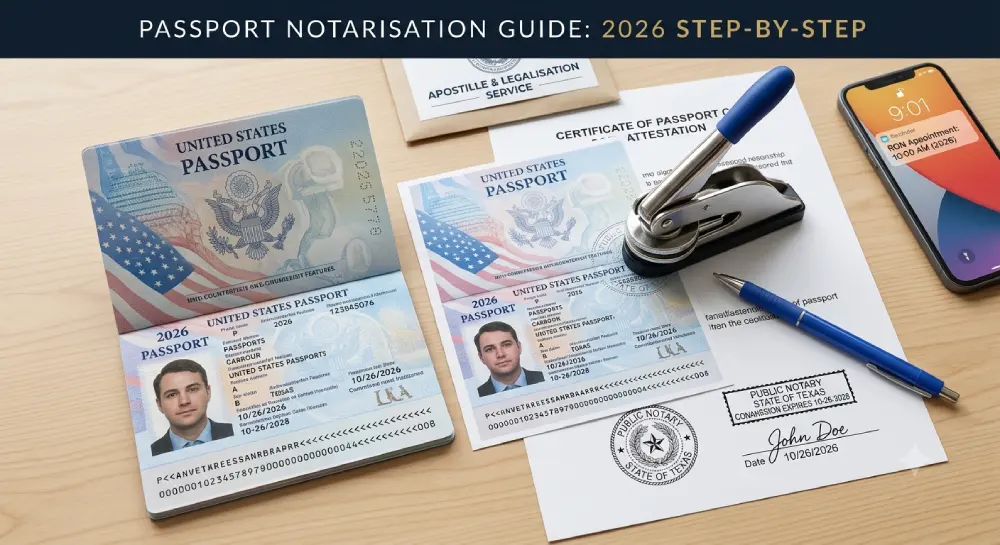
Step-by-Step: How to Get One
Step 1: Prepare Your Materials
- Original Passport: You must bring the actual document. No scans or photos are accepted.
- Clear Photocopy: Make a clear, full-size color copy of the passport’s photo/signature page . If they want a certified copy of the visa page, include that too.
Step 2: Find a Notary
You can find a notary at banks, law offices, UPS stores, or through mobile services that come to you. If you live in a state that allows it, you can use a secure Remote Online Notarization (RON) platform for the affidavit method.
Step 3: The Notary Appointment
In Person: Bring your original passport and the photocopy. The notarised copy of passport will compare them, then seal and sign the copy.
Online (where permitted): You will join a video call, show your passport, and sign a digital affidavit .
Step 4: Receive the Document
The notary public passport will attach a notarial certificate that includes their signature, official stamp, and the date .
Cost and Common Rejection Reasons
Typical Cost: Usually between $5 and $15 per signature in-person. Mobile or online services cost more. Common Rejection is most copies get rejected because they are unclear, missing pages, or the notary did not include the correct wording. Some recipients might even need an apostille if it is for international use.
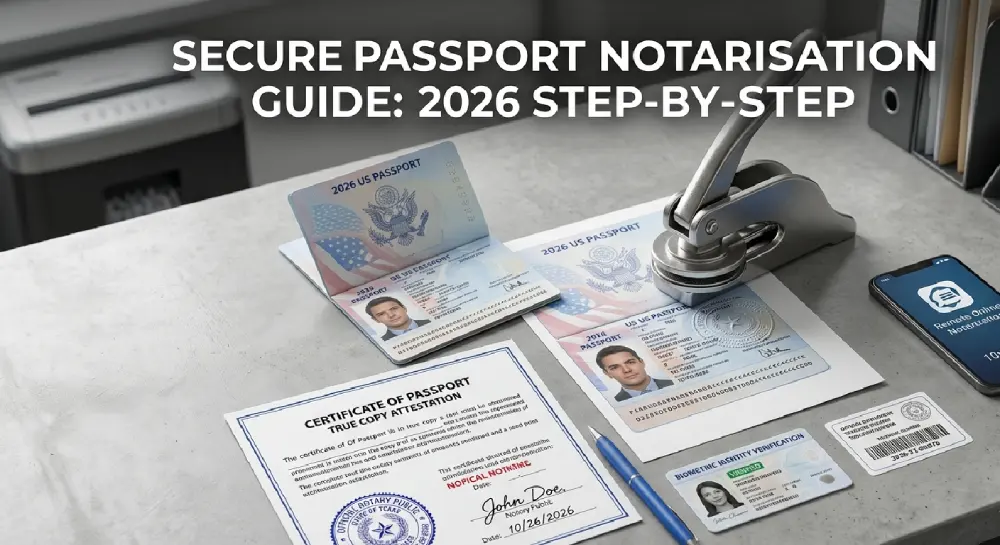
How Remote Online Notarization (RON) Changes the Game
Remote Online Notarization has been getting more common since 2024. Basically, you can do the whole thing from your couch. Upload your passport, verify your identity real quick, then hop on a video call with a notary who watches you sign your affidavit. It’s a lifesaver if you work 9-to-5, don’t have a car, or live somewhere without many notaries around.
But here’s the catch, not all states allow RON for passport copies. And not every country accepts online notarized documents either. So before you go that route, double-check your state’s rules and ask whoever’s requesting the document if they’re cool with it.
Conclusion
Getting a notarised copy of passport is simple when you follow the rule for your state and bring your original document. A notarised copy of your passport makes a solid backup. Lots of embassies and hotels accept notarised copies for registration and verification. So here’s what smart travelers do: stash the original in your hotel safe, and carry the notarised copy for everyday stuff like exchanging currency, buying museum tickets, checking in locally.
Frequently Asked Questions
What is a notarised copy of passport?
It’s just a photocopy of your passport ID page that a notary public has checked against the original, then stamped and signed to confirm it’s a true copy.
Can a notary certify a copy of a passport?
In most states, yeah. But some like California and New York have restrictions or don’t allow it at all. Texas? They’re good with it.
Where can I get a notarised copy of my passport?
Banks, law firms, shipping stores, or mobile notaries who come to you. Some states also let you do it online through remote notarization platforms.
Does a notarised copy of a passport prove the passport is valid?
No. The notary just confirms the copy matches the original you showed them. They don’t check if your passport is still valid or authentic.
Can I notarize my own passport copy?
No way. You gotta go to a licensed notary who’s impartial. You can’t notarize your own stuff.
What’s the difference between a notarised and a certified copy of a passport?
Same thing. Both mean the copy has been officially verified as a true reproduction of the original.
What if my state doesn’t allow notaries to certify passport copies?
You can use the affidavit method, you swear the copy is true and the notary witnesses your signature. Or you might need to go to a state that does allow it.
Do I need an apostille for my notarised passport copy?
If you’re using it overseas, the country you’re sending it to might want further authentication like an apostille.
How to notarize a passport and how long it takes?
In person, it’s about 15 to 30 minutes. Online? Even faster, it could be done in just a few minutes.
