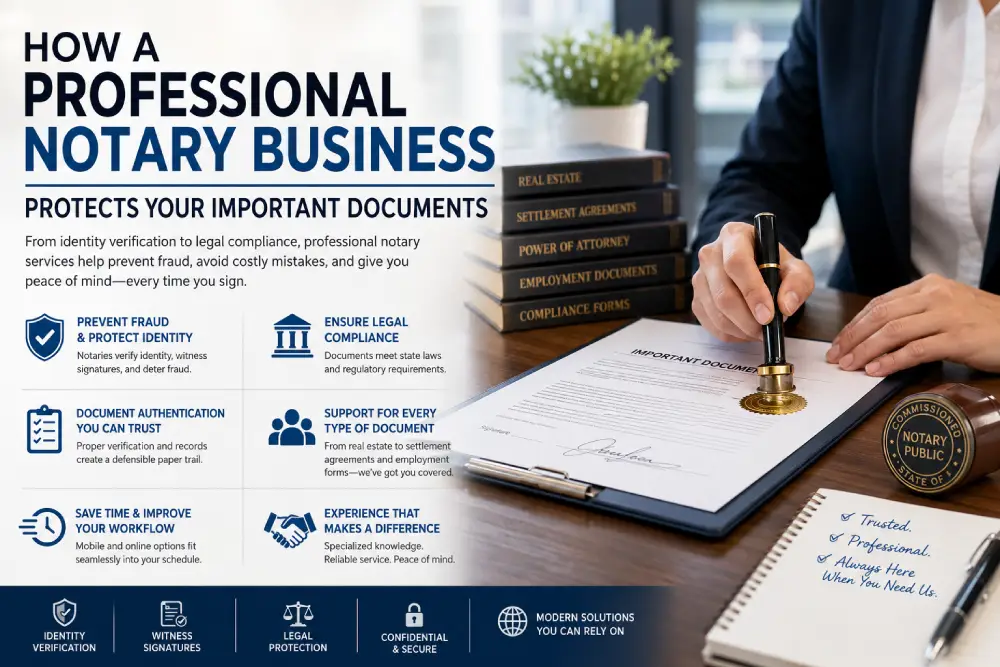
Important documents hold your life together. Think about your employment contract, the deed to your house, settlement agreements, and all those compliance forms you have to fill out. These papers carry serious weight in legal verification and business matters. Yet many people skip a vital step that could save them trouble later. A professional notary business verifies who you are, watches you sign, and makes sure your papers meet legal rules. This guide walks you through how these services protect you from fraud, legal fights, and costly mistakes.
What Notarization Really Does
When someone signs a paper, questions can come up later. Did the right person actually sign? Did they sign freely or were they pressured? These concerns are exactly why you need an impartial witness. A notary business acts as that neutral party, checking that signers are who they say they are and that they know what they are signing.
The job goes way beyond just stamping papers. Professional notaries check identification through official IDs, make sure signers actually understand the document, and keep careful records of everything. This creates a paper trail that protects everyone involved if questions ever come up later.
For companies, working with a company notary adds an extra layer of safety. Corporate papers often need specific wording and procedures that general notaries might not know about. A specialist brings real experience in business documents, cutting down on errors that could hold up important transactions.
Following the Rules
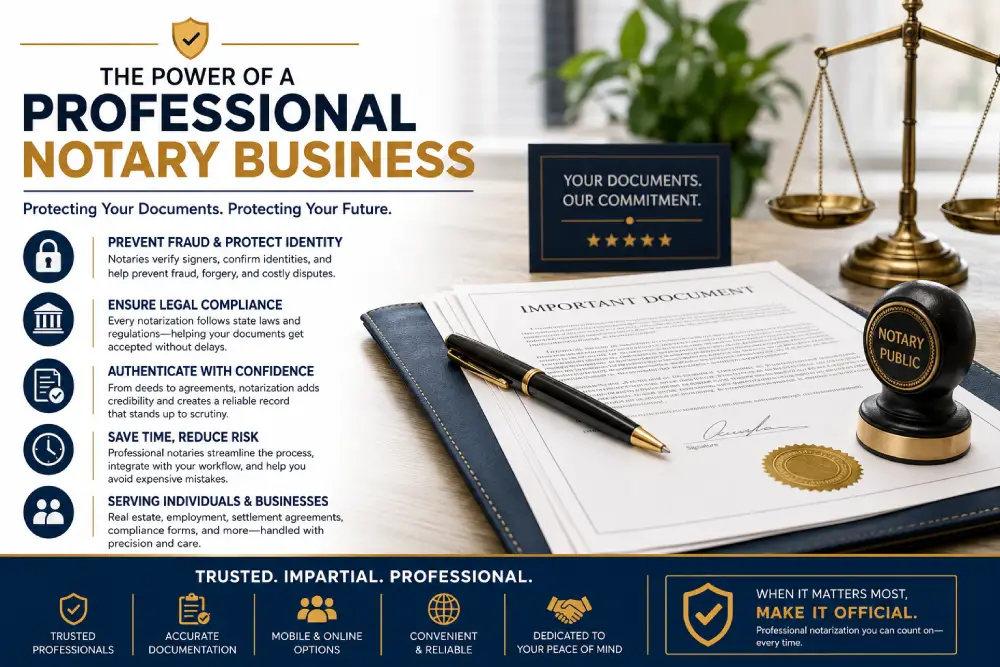
Legal compliance is the foundation of proper notarization. Every state has its own rules about how things should be done. Professional notaries keep up with changing laws to make sure every single document meets local standards.
This care stops expensive mistakes dead in their tracks. Papers not notarized correctly can be rejected by courts, government agencies, and banks. Working with a skilled notary business removes these risks completely.
Checking Documents Properly
Document authentication has grown more important as fraud becomes more advanced and tricky. Professional notaries check document condition, confirm who signed, and make sure proper steps were followed every time.
Property transfers, loan papers, and power of attorney forms all need notarization to stop fraud from happening. An experienced notary business can spot suspicious situations and refuse service when something seems wrong or off.
Witness Signatures Matter
Witness signatures give extra proof when papers need more than one person to attest. Professional notaries understand when witnesses are needed and handle the process properly without any confusion.
For wills, trusts, and certain legal papers, witness signatures may be required by law. A professional business guides clients through these requirements step by step.
Serving Business Clients
Commercial clients have different notarization needs than regular folks. Large volumes of documents, tight deadlines, and specific formatting rules require a provider that truly understands business operations. A reliable notary business adapts to these needs without skipping a beat.
Real estate purchases, business buys, and financing agreements all depend on timely notarization. Professional notaries prioritize these requests while never lowering their high standards.
Fitting Into Your Workflow
Workflow integration is a big benefit of working with a professional notary business. Modern providers offer scheduling that fits smoothly into your business processes without causing disruption.
Many professional notaries now offer mobile services, coming to client locations exactly when needed. This saves precious time and allows signing where it makes the most sense for everyone.
Settlement Agreements Need Notaries
Using a notary for settlement agreements gives important protection during dispute resolution. A notarized settlement carries more weight and lowers the chance of later challenges from anyone involved.
Settlement agreements often involve many parties signing in different places. Professional notaries coordinate these signings to prevent logistical headaches and delays.
Employment Papers and Verification
Employment documents sometimes need notarization for various reasons. Background checks, license verification, and employment contracts may need official witnessing.
Employment verification letter requests often need notarization when sent to government agencies or banks. A proof of employment letter may also need notarization for loan applications or immigration processes too.
Compliance Forms and Rules
Compliance forms are another area where professional notarization proves absolutely essential. Government agencies and licensing boards often require notarized submissions without exception.
Regulatory compliance requires careful attention to document formats and details. A professional notary business understands these details inside out, saving clients from frustration.
The Financial Impact
Badly notarized documents can have serious money consequences. Real estate deals may fall through completely. Loan approvals may be delayed for weeks. Legal cases may get complicated.
Working with a professional notary business gives money protection you can count on. Proper notarization lowers legal risks, speeds up deals, and prevents expensive mistakes from happening.
Technology and Notarization
Technology keeps changing the notary industry every single year. Digital notarization and online verification systems improve efficiency while keeping security high. Remote online notarization allows signing from anywhere with internet access. A forward-thinking notary business offers these options for clients with modern needs.
Choosing the Right Provider
When choosing a notary business, think about experience, availability, and specialization carefully.
Experience Matters
Years of experience bring knowledge of common issues. An established notary business knows how to handle various scenarios that come up.
Availability and Flexibility
Document needs often come up without any warning. A notary business with flexible scheduling provides helpful convenience for busy people.
Specialization in Your Field
Some notaries focus on real estate, legal, or financial documents. This brings extra knowledge that really helps clients.
Frequently Asked Questions
What makes a notarized document legally valid?
A notary checks your ID, watches you sign, and completes an official certificate. They also record the transaction and confirm you understand and sign freely.
How does a company notary differ from a regular notary?
A company notary works mostly with business clients and handles corporate documents. They know business requirements, manage large volumes well, and often come to your office instead of you going to them.
What employment documents need notarization?
License applications, government forms, immigration papers, and some contracts need it. Verification letters and proof of employment often need notarization for loans or visa applications too.
How does workflow integration help businesses?
It lets you schedule notary services easily within your normal work day. Mobile services mean employees can sign papers right at their desks without leaving the office.
What is a notary’s role in settlement agreements?
The notary makes sure everyone signs freely and shows proper ID. They witness everything and confirm people understand what they are signing. This stops anyone from challenging the settlement later.
Why is regulatory compliance important?
It makes sure your documents get accepted by courts and government agencies. Following the rules also protects you from legal problems and keeps the notary profession trustworthy.
What documents need witness signatures?
Wills, trusts, property papers, health care directives, and powers of attorney often need witnesses. A good notary business helps arrange witnesses when your documents require them.
How do commercial clients benefit from specialized notaries?
They get faster service, people who understand business documents, and scheduling that works around their needs. This stops delays and ensures everything meets legal requirements.
What verification methods do notaries use?
They check government-issued photo IDs, review your documents, make sure you are aware of what you are signing, and keep detailed records. Many now use electronic tools too.
How can I ensure my documents meet compliance standards?
Choose a commissioned notary who knows your state’s laws and uses correct certificate wording. Ask about their experience and verify their commission with the proper authority.
