You spend years building your life. You buy a house. You save money. You put money into retirement accounts. You invest. You build a business.
- You work late nights.
- You make sacrifices.
- You do all of that because you want your family to be okay one day.
Then a question starts sitting in the back of your mind. What happens to everything later?
- Who gets the house?
- Who handles the bank accounts?
- Who takes care of the paperwork?
- Who makes sure the family does not end up arguing?
That is exactly why people create a revocable living trust. The trust gives answers before the questions ever show up. It says who receives assets. It says who handles responsibilities. It says what happens next. But there is something many people do not realize. Signing the documents is only part of the job.
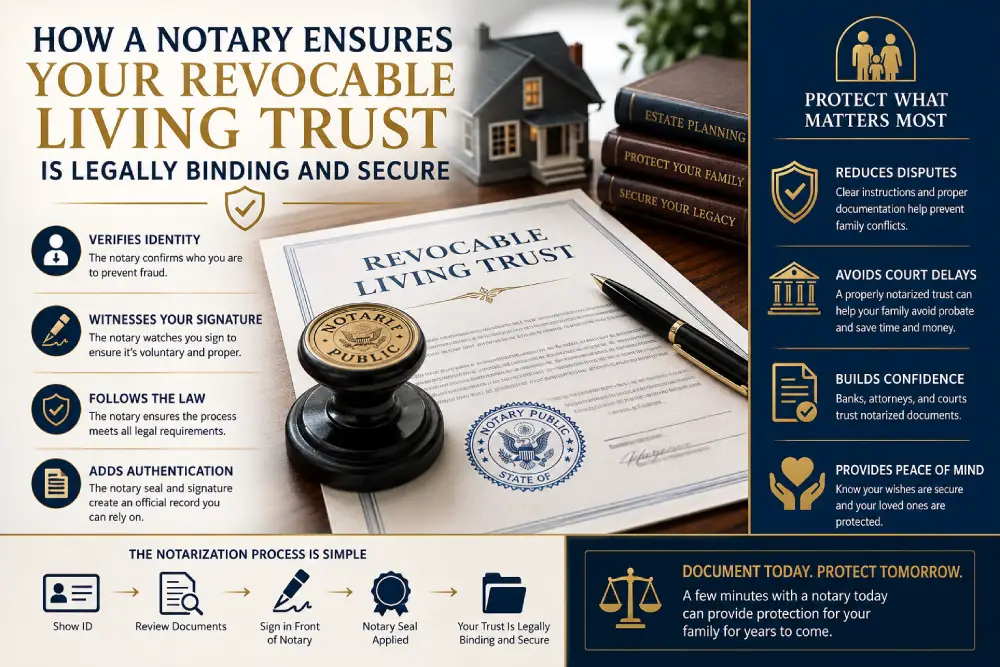
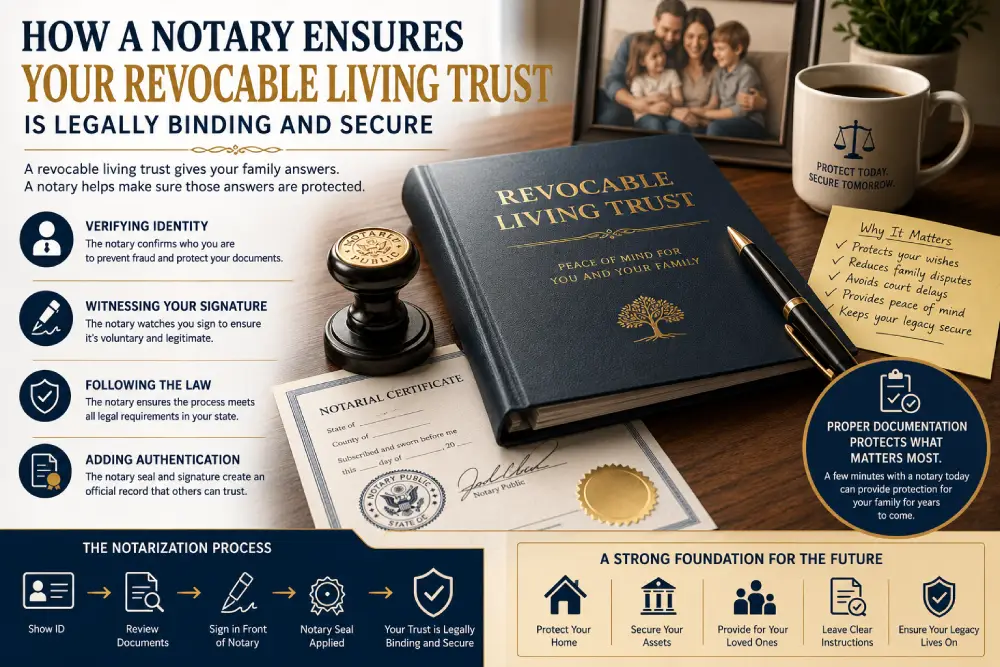
The documents also need to be signed correctly. This is where a notary walks into the picture. A notary does not just stamp papers and leave. The notary checks who you are.
The notary watches you sign. The notary makes sure everything happens properly. Those few minutes may not feel important today. Years later, they can become one of the most important parts of the entire trust.
So, What Exactly Is a Revocable Living Trust?
Think about it this way. You are putting your wishes on paper. You are telling your family: This belongs here. This goes to this person. This is how things should be handled.
A revocable living trust allows you to place your assets into a trust while keeping complete control. The house is still yours. The money is still yours. The investments are still yours.
Nothing changes about your control.
- You can change the instructions.
- You can add property.
- You can remove property.
- You can update beneficiaries.
- You can change your mind.
Life changes. People move. Families grow. Situations change. That flexibility is why so many people choose a living revocable trust.
Why Do People Even Create a Trust?
Because nobody wants their family dealing with problems. Nobody wants children fighting. Nobody wants brothers and sisters arguing. Nobody wants court delays. Nobody wants loved ones saying:
- What did Mom want?
- What did Dad mean?
- Who gets this?
- Who handles that?
A revocable living trust gives people answers. The instructions are already there. The wishes are already written down. The family does not have to guess.
Where Does the Notary Come In?
This is the part many people overlook. The paperwork gets prepared. The signatures happen. The documents go into a folder. Everyone thinks the job is finished. Years later, questions can appear.
- Was this really signed?
- Was this the right person?
- Did they understand the paperwork?
- Did someone pressure them?
- Did someone change the documents?
That is why the notarization process matters. The notary becomes an independent witness. The notary says:
- Yes, this person appeared.
- Yes, their identity was checked.
- Yes, they signed willingly.
- Yes, the process was completed properly.
What Actually Happens During the Appointment?
Most people expect something difficult. It usually is not. You sit down. You show your identification. The notary reviews the documents. You sign.
The official seal is added. That is it. But those simple steps create protection. The notary stamp and seal become part of the record. Years later, those details can matter.
Why Is the Notary Seal Such a Big Deal?
Imagine somebody reading the documents years from now. They see the seal. Immediately, they know something important happened. Someone verified identity. Someone witnessed the signatures. Someone followed official rules. Someone confirmed the process.
That small notary seal says a lot without saying many words.
- Banks trust it.
- Attorneys rely on it.
- Courts recognize it.
- Families benefit from it.
Can Someone Challenge a Trust?
Yes. Families are families. Sometimes people disagree. Sometimes money creates questions. Sometimes people believe something was unfair. Someone may say: That signature does not look right. Someone may say: The documents were changed. Someone may say: They did not understand what they signed.
A properly notarized revocable living trust helps answer those concerns. The signing was witnessed. The identity was verified. The documents were completed properly. That can make a major difference later.
Why Does Authentication Matter?
Think about finding important documents ten years from now.
- How do people know the papers are real?
- How do they know nobody changed them?
- How do they know the signatures belong to the right person?
The authentication of documents helps answer those questions. The notary checks identification. The notary watches the signatures. The notary confirms the process. That creates confidence.
What Is a Trust Deed?
Many people think creating the trust automatically moves everything into it. That is not always true. A trust deed helps transfer certain assets.
Things like:
- Homes.
- Land.
- Investment property.
- Certain financial assets.
Without proper transfers, assets may stay outside the trust.
That is why details matter.

Why Does Good Legal Documentation Matter?
Good legal documentation saves families from confusion. Good paperwork gives answers. Good paperwork prevents arguments. Many important legal agreements depend on clear records.
The clearer the documents, the easier things become. Nobody wants their family trying to figure things out years later. People want answers already waiting for them.
What About Structured Settlements?
People often ask what is a structured settlement because these arrangements involve payments over time. With structured settlements, every document matters.
- Every signature matters.
- Every record matters.
The same thing applies to a revocable living trust. Good records protect people. Good paperwork protects families.
Why Do Structured Settlement Transfers Need Documentation?
Structured settlement transfers usually involve paperwork, reviews, and legal records. A structured settlement company wants everything documented.
Why? Because details matter. Identity matters. Signatures matter. Records matter. The same thinking applies to trust documents.
Why Is the Notary Stamp and Seal Important?
The notary stamp and seal tell people that everything happened correctly. Many professionals carefully order notary stamp supplies because every detail matters. The stamp tells people:
- This signature was witnessed.
- This identity was verified.
- This document followed the proper process.
That creates trust.
When Should You Review Your Trust?
Life changes. People get married. Children are born. People retire. Homes are purchased. Families grow. Relationships change. Those moments are good opportunities to review your revocable living trust and make sure it still reflects your wishes.
Before Meeting the Notary
Bring:
- Your identification.
- Your documents.
- Witnesses if required.
- Supporting paperwork.
Do not sign early.
The notary usually needs to watch the signature happen.
The Real Reason People Create Trusts
People do not create trusts because they enjoy paperwork. People create trusts because they love their families. They want fewer problems, fewer questions, fewer arguments. They want clear answers. A revocable living trust helps provide those answers.
A notary helps protect those answers. The appointment may last fifteen minutes.
- The protection may last for decades.
- That is why notarization matters.
- That is why details matter.
That is why proper documents matter. Because one day, the people you care about may depend on them.
Frequently Asked Questions
Does a revocable living trust need notarization?
Many states recommend notarization because it helps prove that the documents were signed properly and willingly.
Why does a notary check identification?
The notary verifies identity to help prevent fraud and protect the documents.
Can family members challenge a trust?
Yes. Disagreements can happen, which is why proper documentation matters.
What does the notary seal mean?
The seal confirms that the signing process happened correctly.
Can the trust be changed?
Yes. A revocable trust allows changes during the creator’s lifetime.
What is a trust deed?
A trust deed helps transfer assets into the trust.
Why are structured settlements mentioned?
Both involve documentation, verification, and legal records.
How long does notarization take?
Most appointments take between ten and thirty minutes.
Why is legal documentation important?
Good records reduce confusion and protect families.
How often should a trust be reviewed?
Many professionals recommend reviewing trust documents after major life changes.
